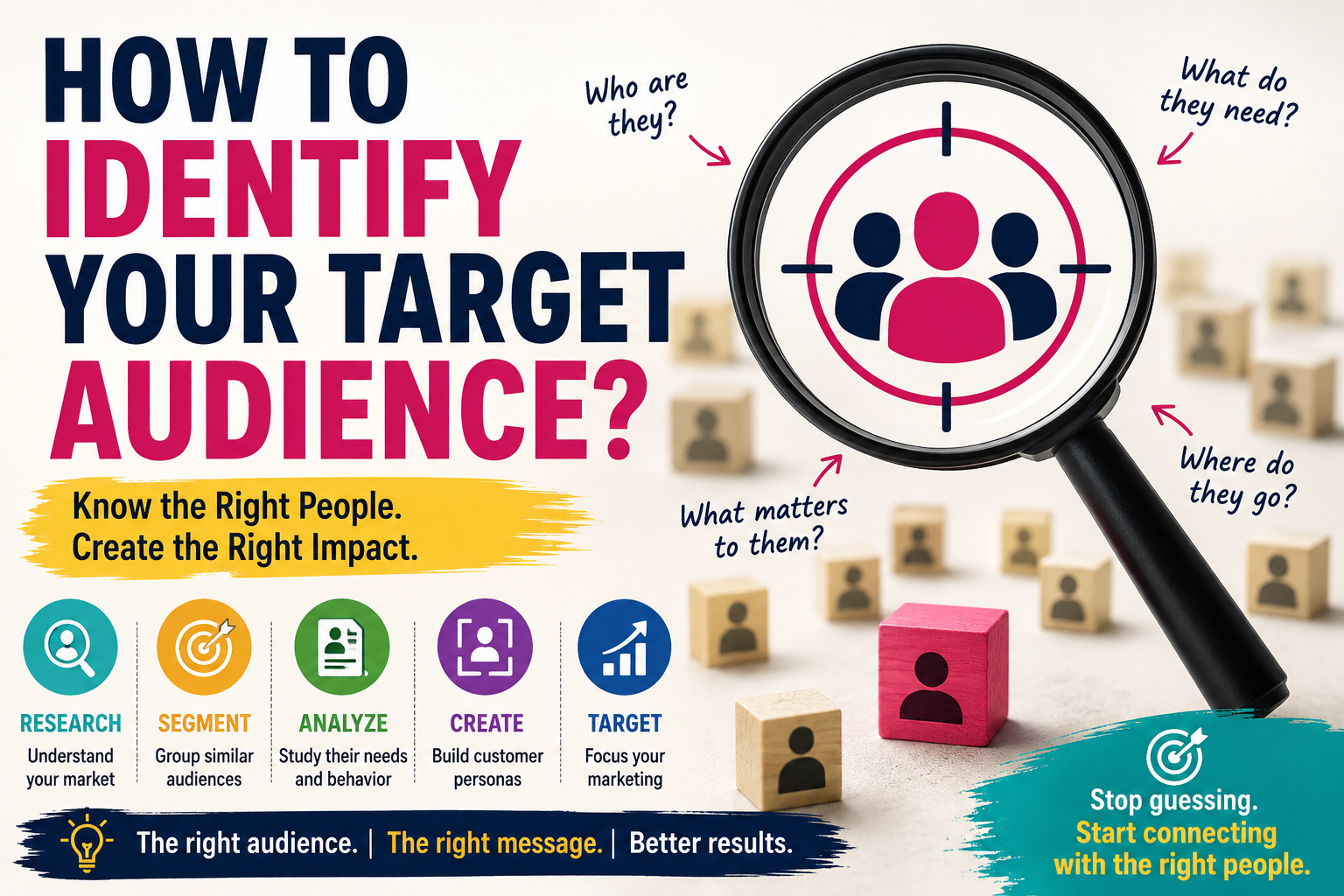
One of the biggest mistakes small businesses make is believing that everyone can be their customer.
While it may seem logical to appeal to as many people as possible, broad marketing often leads to weak messaging, wasted advertising budgets, and poor conversions.
Successful businesses don’t market to everyone—they market to the right people.
Identifying your target audience is the first step toward creating content that connects, advertising that converts, and products or services that genuinely solve customer problems.
What Is a Target Audience?
A target audience is the specific group of people who are most likely to need, value, and purchase your product or service.
These are the people your marketing should speak to directly.
Your target audience can be defined by:
- Age
- Gender (where relevant)
- Location
- Occupation
- Income level
- Interests
- Lifestyle
- Buying behavior
- Challenges
- Goals
The more clearly you understand your audience, the easier it becomes to create marketing that feels relevant and personal.
Why Knowing Your Target Audience Matters
Businesses that understand their customers make better decisions at every stage of marketing.
A clear target audience helps you:
- Create content that answers real customer questions.
- Run more effective advertising campaigns.
- Improve website conversions.
- Increase engagement on social media.
- Reduce wasted marketing spend.
- Build stronger customer relationships.
Instead of guessing what people want, you’ll be creating solutions based on real customer needs.
Step 1: Analyze Your Existing Customers
If you already have customers, start there.
Ask yourself:
- Who buys from me most often?
- Which customers return again?
- What problems are they trying to solve?
- Why did they choose my business instead of another?
Your existing customers provide valuable insights into the type of people you should attract more of.
Step 2: Understand Their Problems
People don’t buy products—they buy solutions.
Focus on understanding:
- What frustrates them?
- What goals are they trying to achieve?
- What obstacles are preventing success?
- What questions do they frequently ask?
When your marketing speaks directly to these challenges, customers feel understood.
Step 3: Study Your Competitors
Your competitors can teach you a great deal about the market.
Observe:
- Who they target
- What type of content performs well
- Customer reviews
- Frequently asked questions
- Common complaints
This research helps identify opportunities to differentiate your business.
Step 4: Create a Customer Persona
A customer persona is a detailed profile of your ideal customer.
Include information such as:
- Name (fictional)
- Age
- Profession
- Location
- Goals
- Challenges
- Buying habits
- Preferred communication channels
This makes it easier to create content and campaigns that feel like they’re written for one specific person.
Step 5: Test and Refine
Your audience may evolve over time.
Use data from your website, social media, customer inquiries, and sales to understand what’s working and what needs improvement.
Marketing is not a one-time activity—it’s an ongoing learning process.
Common Mistakes to Avoid
Many businesses struggle because they:
- Try to target everyone.
- Assume they already know their customers.
- Focus only on demographics instead of behavior.
- Ignore customer feedback.
- Copy competitors without understanding their own audience.
Avoiding these mistakes will make your marketing more effective and efficient.
Final Thoughts
Your target audience is the foundation of every successful marketing strategy.
When you understand who your customers are, what they need, and why they buy, every marketing decision becomes easier—from writing social media posts to creating advertisements and improving your website.
Don’t aim to reach everyone.
Aim to reach the right people, with the right message, at the right time.
That’s where sustainable business growth begins.
Frequently Asked Questions
What is the difference between a target audience and a target market?
A target market is the broader group of potential customers, while a target audience is the specific segment you are addressing with a particular campaign or message.
How do I identify my target audience?
Research your current customers, understand their problems, analyze competitors, create customer personas, and continuously refine your understanding using real data.
Why is identifying a target audience important?
It helps improve marketing effectiveness, increase conversions, reduce advertising costs, and build stronger customer relationships.
Can a business have more than one target audience?
Yes. Many businesses serve multiple customer segments, but each should have its own tailored messaging and marketing strategy.
Related Articles
- The Complete Guide to Digital Marketing for Small Businesses
- Why Facebook Ads Are Not Giving Leads
- Why Instagram Followers Don’t Become Customers
- Difference Between Branding and Marketing
- What Is Customer Persona?
Need Help Finding Your Ideal Customers?
Many businesses struggle with low engagement, poor-quality leads, and ineffective marketing because they aren’t speaking to the right audience.
At Direct2Mentor, we help small businesses:
✅ Identify their ideal customers
✅ Create detailed customer personas
✅ Build data-driven marketing strategies
✅ Improve website and social media performance
✅ Attract qualified leads instead of random traffic
Ready to stop guessing and start reaching the right customers?
👉 Book a consultation with Direct2Mentor today and build a marketing strategy based on real customer insights—not assumptions.